






↓↓English Below↓↓
皆さんこんにちは!!東京都千代田区 麹町駅と半蔵門駅の間 新宿通り沿いのビル2階・3階にある整形外科クリニック“OneClinic 麹町(ワンクリニック麹町)”院長の栗本です!!
寒さも本格化してきましたが、皆様いかがお過ごしでしょうか?先日脊椎の勉強会に参加したこともあって、今日も腰の話をしてみたいと思います。
スポーツを楽しむ多くの方にとって、腰痛は最も身近で、そしてパフォーマンスを大きく左右する問題だと思います。
特に野球・バドミントン・格闘技・ランニングなど「回旋動作」や「素早い切り返し」が必要な競技では、腰部への負担が蓄積しやすく、慢性腰痛や腰椎分離症のリスクが高まります。
近年のスポーツ医学研究では、腰そのものだけではなく、胸椎(胸の高さの背骨)の動きが腰痛と密接に関係することが再確認されてきました。
当院でも、胸椎・骨盤・股関節の動きを評価し、リハビリの中で「腰に頼らない身体の使い方」を習得していただくことで、再発しにくい身体づくりをサポートしています。
■ スポーツで腰痛が起こりやすい理由
胸椎の可動性低下が腰に負担を集中させる
バドミントン選手を対象とした研究では、腰痛を有する選手は胸椎の「伸展」と「利き手側回旋」が有意に低下していることが示されました。
胸椎が動かなければ、本来そこで吸収されるはずの力を腰椎が代わりに受けることになります。
【よくある代償動作】
- 胸が反らない → 腰を反らして補う
- 胸が回らない → 腰をひねって補う
- 肋骨が固い → 骨盤を前傾・後傾で誤魔化す
これが積み重なると、
- 腰椎分離症
- 腰椎椎間関節性腰痛
- 筋・筋膜性腰痛
につながります。
競技量が増える学生アスリートや週数回のトレーニング習慣がある社会人では特に注意が必要です。
■ 運動療法で胸椎可動性を改善するとどうなる?
研究では、キャット&ドッグ、胸椎回旋ストレッチ、ウィンドミルなどを継続した結果、胸椎の伸展・回旋の可動域は明らかに改善しました。
- 研究データ
- 介入前:10.5%が長期離脱
- 介入後:2.4%程度のみが長期離脱
つまり、可動性の改善は「大怪我の予防」に大きく貢献するということのようです。
当院の臨床でも同様に、胸椎や股関節の動きを整えることで、「腰椎に過度な負担が集中しない動き」が習得され、痛みの再発が減少するケースが多く見られます。
■ “体幹コントロール” の重要性
深層筋(多裂筋)を使える身体が腰を守る
最近の筋電図研究では、胸椎多裂筋(背骨を支える深層筋)は、意識しないと活動しにくい筋肉であることがわかってきました。
胸椎が動かない/体幹が安定しない状態では、外側の筋肉(最長筋など)が優位になり、腰の反り・回し過ぎにつながります。
当院のリハビリでは、以下のような「深層筋を使いやすくする運動」を導入しています。
■ 当院で行っている体幹制御トレーニングの例
- 胸椎の分節的な動きを学ぶエクササイズ
- 頸部を軽く伸展させながら胸椎多裂筋を働かせるエクササイズ
- 呼吸を使った肋骨と骨盤の安定化トレーニング
- 四つ這いでの胸椎回旋(腰が動かないよう固定筋を使う練習)
ピラティスのような「軸の伸長」や「分節的な動き」に似た動作も登場しますが、当院ではリハビリとして同様の“体の使い方”を習得するアプローチを採用しています。
■ (どなたでも・自宅でも)今日からできる腰痛予防ストレッチ
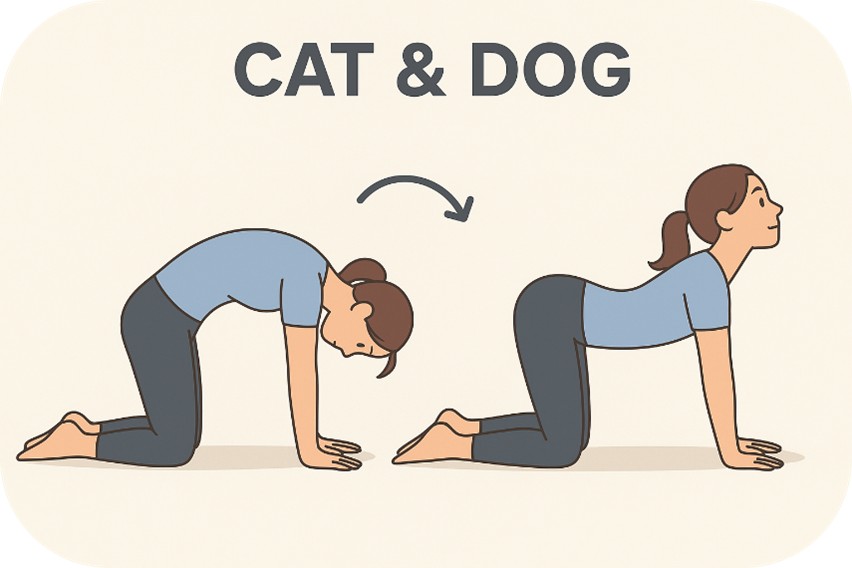
- ① キャット&ドッグ
胸椎の伸展・屈曲を滑らかにする。
腰ではなく「胸」で丸め・反らす意識がポイントです。
- ② 四つ這い胸椎回旋ストレッチ
左右片方ずつ手を頭に添え、胸を開くように回旋。両側行いましょう。
腰が回らないように骨盤を安定させる意識を持つと効果が倍増します。
- ③ 呼吸を意識した肋骨のコントロール
「フーッ」と長く吐きながら腹筋・肋骨を締め、体幹の安定性を作っていきます。
腹筋の過剰な力みを取る効果もあり、腰痛持ちに非常に有効。
■ 当院の腰痛リハビリの特徴
- ① 胸椎・肋骨・骨盤の連動性を評価
痛む場所だけでなく、動かない関節を探し出します。
- ② “分節的な動き”の習得
理学療法としての動作学習を実施します。
- ③ 子どもから大人まで安全にできる段階的プログラム
四つ這い・仰向けなど安定した姿勢から始め、徐々に競技動作へ発展。
- ④ スポーツ復帰を見据えたコントロールと可動性の再構築
痛みが取れた後の「再発予防」も重視しています。
■ まとめ|胸椎が動けば腰痛は防げる
スポーツ愛好家・アスリートの腰痛は、“腰そのもの”よりも胸椎・肋骨・股関節が適切に動くかどうかが大きな鍵となります。胸椎の可動域を改善し、体幹深層筋を使った正しいコントロールができれば、腰椎への負担は大幅に減り、スポーツのパフォーマンスも向上すると考えます。
■ 腰痛でお悩みの方へ
当院では、スポーツ選手から運動習慣のある一般の方まで幅広く診療し、
「腰に頼らない身体の使い方」を身につけるリハビリを提供しています。
- 繰り返す腰痛
- 競技復帰を急ぎたい
- パフォーマンスアップも同時に目指したい
という方はぜひご相談ください。
寒さも本格化してきております。インフルエンザも大流行しているようです。
くれぐれもご自愛くださいませ。
Hello everyone!! I’m Kurimoto, Director of OneClinic Kojimachi, an orthopedic clinic located on the 2nd and 3rd floors of a building along Shinjuku-dori, between Kojimachi Station and Hanzomon Station in Chiyoda Ward, Tokyo!!
The cold weather is really setting in now, but how are you all doing? Having recently attended a study session on the spine, I’d like to talk about the lower back again today.
For many people who enjoy sports, lower back pain is the most common issue and one that significantly impacts performance. Especially in sports like baseball, badminton, martial arts, and running that require “rotational movements” or “quick changes of direction,” stress on the lower back tends to accumulate, increasing the risk of chronic lower back pain and lumbar spondylolysis.
Recent sports medicine research has reaffirmed that lower back pain is closely linked not only to the lower back itself but also to the mobility of the thoracic spine (the spine at chest height). At our clinic, we assess the mobility of the thoracic spine, pelvis, and hips. Through rehabilitation, we help patients learn “body mechanics that don’t rely on the lower back,” supporting the development of a body less prone to recurrence.
■ Why Sports Often Cause Lower Back Pain
Reduced thoracic mobility concentrates stress on the lower back
A study of badminton players showed that those with lower back pain had significantly reduced “extension” and “dominant-side rotation” in the thoracic spine.
When the thoracic spine doesn’t move, the force that should be absorbed there is instead transferred to the lumbar spine.
【Common Compensatory Movements】
- Chest doesn’t arch → Compensate by arching the lower back
- Chest doesn’t rotate → Compensate by twisting the lower back
- Ribs are stiff → Compensate by tilting the pelvis forward or backward
When these issues accumulate, they can lead to:
- Lumbar spondylolysis
- Facet joint pain in the lumbar spine
- Muscle/fascial lower back pain
Particular caution is needed for student athletes whose training volume increases and working adults who train several times a week.
■ What happens when thoracic mobility is improved through exercise therapy?
Studies show that consistently performing exercises like Cat & Dog, thoracic rotation stretches, and Windmills
significantly improved the range of motion for thoracic extension and rotation.
Interestingly,
**“The actual back pain itself didn’t change much,” but “the number of long-term sidelined athletes decreased significantly.”**
- Research Data
- Before intervention: 10.5% long-term absenteeism
- After intervention: Only 2.4% long-term absenteeism
This suggests improved mobility significantly contributes to preventing major injuries.
Similarly, in our clinic’s practice, we frequently observe that adjusting thoracic spine and hip joint movement allows athletes to learn “movements that avoid excessive load concentration on the lumbar spine,” leading to reduced pain recurrence.
■ The Importance of “Core Control”
A body capable of utilizing deep muscles (multifidus) protects the lower back
Recent electromyography research has revealed that the thoracic multifidus (deep muscles supporting the spine) are muscles that are difficult to activate without conscious effort.
When the thoracic spine is immobile or the core is unstable, outer muscles (such as the erector spinae) become dominant, leading to excessive lumbar extension and rotation.
Our rehabilitation incorporates exercises designed to facilitate the use of these deep muscles, such as:
■ Examples of Core Control Training at Our Clinic
- Exercises to learn segmental movement of the thoracic spine
- Exercises to activate thoracic multifidus while gently extending the neck
- Breath-based stabilization training for the ribs and pelvis
- Thoracic Spine Rotation on All Fours (Practice using stabilizing muscles to keep the lower back still)
While movements resembling Pilates concepts like “axis elongation” or “segmental movement” appear, our clinic does not practice Pilates itself. Instead, we adopt an approach focused on rehabilitation to learn similar “body mechanics.”
■ Back Pain Prevention Stretches You Can Start Today (Anyone Can Do)
- ① Cat & Dog
Smoothens thoracic extension and flexion.
The key is to consciously round and arch using your “chest,” not your lower back.
- ② Thoracic Spine Rotation Stretch on All Fours
Place one hand on each side of your head and rotate, opening your chest. Do both sides.
Effectiveness doubles if you consciously stabilize your pelvis to prevent hip rotation.
- ③ Windmill Stretch (Windmill)
Simultaneously enhances thoracic spine rotation and shoulder flexibility.
- ④ Rib Control with Breath Awareness
Exhale deeply (“Huuu”) while drawing your ribs inward to create core stability.
Also helps release excessive abdominal tension, highly effective for those with chronic back pain.
■ Features of Our Back Pain Rehabilitation Program
- ① Assessing Thoracic Spine, Rib Cage, and Pelvis Coordination
We identify not just the painful area, but also joints with restricted movement.
- ② Mastering “Segmental Movement”
We implement movement learning as part of physical therapy.
- ③ A Safe, Step-by-Step Program for All Ages
Starting with stable positions like crawling or supine, gradually progressing to sport-specific movements.
- ④ Rebuilding Control and Mobility with a Focus on Sports Return
We emphasize “relapse prevention” after pain resolution.
■ Summary|Preventing Lower Back Pain Through Thoracic Spine Mobility
For sports enthusiasts and athletes, the key to preventing lower back pain lies less in the lower back itself and more in the proper movement of the thoracic spine, ribs, and hips. Improving thoracic spine range of motion and achieving correct control using deep core muscles significantly reduces strain on the lumbar spine and enhances athletic performance.
■ For Those Suffering from Lower Back Pain
Our clinic treats a wide range of patients, from athletes to active individuals,
providing rehabilitation focused on learning “body mechanics that don’t rely on the lower back.”
- If you experience recurring lower back pain
- If you want to return to competition quickly
- If you also aim to improve your performance
please feel free to consult us.
The cold weather is setting in, and influenza seems to be spreading widely.
Please take good care of yourself.
